

The fastest way to lose an eviction case in Oklahoma has nothing to do with your tenant. It usually comes down to a single line on a notice you thought was fine.
Most evictions start the same way. A tenant fails to pay rent or ignores the lease terms, and the landlord-tenant relationship starts to crack. Owners want the problem solved fast. That urgency is exactly where small mistakes slip in and cost weeks of progress.
Oklahoma gives landlords a quick route to reclaim their rental property. The catch is that the route follows strict rules at every turn. This article explains the full legal process and what each step requires before you start. Read on.
Key Takeaways
- The right notice comes first. Every Oklahoma eviction starts with a written notice that matches the reason, and one error can restart the entire process.
- Oklahoma's timeline moves fast. Hearings land within days of filing, so landlords need their paperwork ready before the case begins.
- Only the court and sheriff can remove a tenant. Lockouts and utility shutoffs break state law and can expose landlords to legal action.
- Prevention beats eviction. Careful screening and consistent lease enforcement prevent many problems from reaching the courtroom.
What’s Inside:
|
Oklahoma Eviction Laws Come From Two Sets of Statutes
Oklahoma splits its eviction rules between two parts of state law. Here's what Oklahoma landlords should know.
Title 41 Sets the Notice Requirements
The Oklahoma Residential Landlord and Tenant Act lives in Title 41 of the Oklahoma Statutes. This landlord-tenant act covers various aspects of renting, including security deposits and every required notice period. It also spells out landlord-tenant rights on both sides.
Title 12 Governs the Court Case
The eviction lawsuit is called a forcible entry and detainer action. These legal proceedings follow Title 12 rules and are heard in the county court where the rented premises are located.
Oklahoma Has No Statewide Just-Cause Requirement
Oklahoma landlord-tenant laws don't require a reason to end a month-to-month tenancy. You still need legal grounds and proper notice to end an active lease early.
Legal Grounds for Eviction in Oklahoma
Each eviction reason has its own notice rules, and improper notice can stall your case. Here are the most common legal grounds:
- Nonpayment of rent: When a tenant fails to pay rent, serve a 5-day written notice. Under Oklahoma law, this also serves as your demand for possession.
- Lease violations: The tenant gets 10 days to fix the issue. If they don't, the rental agreement ends 15 days after receiving notice.
- Month-to-month tenancy: Ending this tenancy requires 30 days' written notice. Owners often use the same window to raise rent or update lease terms.
- Serious criminal activity: Threats to health or safety can allow a faster filing. These cases carry extra legal considerations, so consult an attorney first.
The Step-by-Step Oklahoma Eviction Process
Courts expect landlords to follow a set order. Here are the steps of the Oklahoma eviction process.
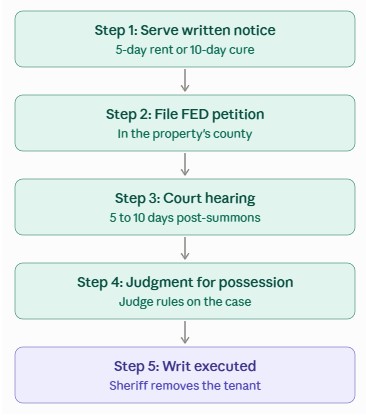
Step 1: Serving the Correct Written Notice
Your eviction notice should include the necessary details:
- Every tenant's name and the rental unit address
- The amount owed or the specific violation
- The deadline to pay or fix the issue
- The date and method of delivery
Hand delivery with proof is a common choice. Many property managers also send a copy by certified mail. Keep proper documentation of all legal notices you send.
Step 2: Filing a Forcible Entry and Detainer Petition
Once the deadline passes, file your petition with the district court in the property's county. Tulsa owners file at the Tulsa County Courthouse. Attach the lease agreement and a copy of your notice.
Step 3: The Hearing Set 5 to 10 Days After the Summons
The court issues a summons, and the hearing must fall 5 to 10 days after that date. This short window is a big reason Oklahoma eviction procedures move so fast.
Step 4: The Judgment for Possession
The judge reviews your case along with any tenant actions or defenses. A ruling in your favor grants possession. It may also cover unpaid rent and court costs.
Step 5: The Writ Carried Out by Law Enforcement
After judgment, you can request a writ of execution. Only the sheriff can carry it out. Landlords can't legally evict a tenant on their own.
Every deadline in an eviction matters. At Home Rental Management manages notices and court filings for Tulsa rental owners, so your case stays on track. Explore our property management services and see how we protect your investment.
Mistakes That Derail an Oklahoma Eviction
Small errors can void your case or create new liability. Here are the missteps that cost landlords the most:
- Self-help evictions: Changing locks, cutting off utilities, or removing belongings breaks state law. These shortcuts can turn a strong case into legal action against you.
- Incorrect notices: A wrong date or missing amount can get your case dismissed. Double-check every notice before delivery.
- Accepting rent mid-process: Taking payment after serving notice may affect your right to proceed. Get legal advice before accepting any money.
- Ignoring fair housing rules: These protections cover every stage of an eviction. Treating every tenant the same way helps ensure fair treatment and keeps you in compliance.
Frequently Asked Questions
Q: How much does it cost to file an eviction in Oklahoma?
Filing and service fees vary by county. Check with your local court clerk for current rates.
Q: Do eviction filings stay on a tenant's record in Oklahoma?
Yes. Eviction filings remain publicly available even when they were dismissed in the tenant's favor or filed by mistake.
Q: Can a tenant appeal an eviction judgment in Oklahoma?
Yes. A tenant who wants to stay in the unit during an appeal generally must post a court-set bond.
Getting Every Step Right the First Time
Most landlords never want to file an eviction. Prevention starts long before you send a notice.
Screen potential tenants carefully. Keep the property up to code and respond quickly to repair requests. Habitable living conditions protect tenant rights and strengthen your position if tenant disputes reach court. Return security deposits properly when the lease ends. These habits help you avoid disputes and stay up to date on changing state regulations.
Oklahoma landlords must treat eviction as a legal process with strict rules. Good property management makes those rules easier to follow.
The best eviction is the one you never file. At Home Rental Management screens applicants thoroughly and enforces leases consistently to protect Tulsa owners from costly turnover.
Let's talk and find the right property management plan for your rental.
.jpg)